
Treatment Packages and Memberships: How Skin Clinics Can Build Recurring Revenue
Stop guessing what next month’s revenue will look like. Learn how skin clinics can use treatment packages and memberships to bring patients back regularly and build predictable, recurring income.
Zynva Bussiness Unit
Business team
NOV 11·8 min read
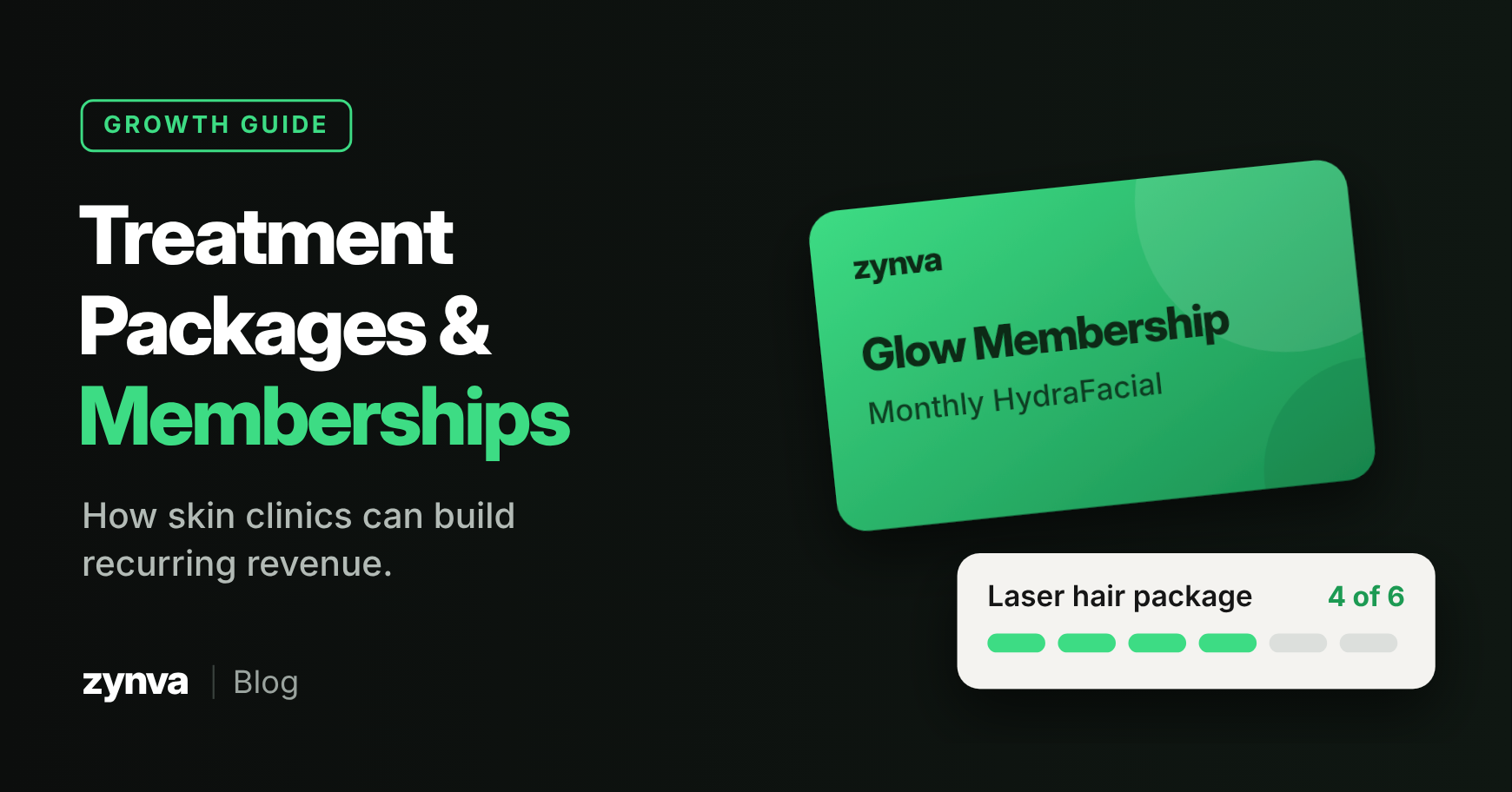
Treatment Packages and Memberships: How Skin Clinics
Can Build Recurring Revenue
Ask most skin clinic owners what keeps them up at night and you’ll hear some version of the same answer: “I never know what next month will look like.” One month the calendar is full. The next, it’s quiet, and you are back to running offers and boosting Instagram posts to fill the gaps.
The clinics that escape this cycle have usually done one thing well. They have stopped selling only one treatment at a time, and started selling packages and memberships. Instead of hoping a patient comes back, they have a plan in place that brings them back.
This guide explains the difference between packages and memberships, which treatments suit each, how to price them, the mistakes to avoid, and how to track everything without drowning your front desk in paperwork.The clinics that escape this cycle have usually done one thing well. They have stopped selling only one treatment at a time, and started selling packages and memberships. Instead of hoping a patient comes back, they have a plan in place that brings them back.
This guide explains the difference between packages and memberships, which treatments suit each, how to price them, the mistakes to avoid, and how to track everything without drowning your front desk in paperwork.
What Is Recurring Revenue for a Skin Clinic?
Recurring revenue is income you can reasonably expect again next month, because patients have already committed to it. For a skin or aesthetic clinic, it usually comes from two sources:
• Treatment packages: a patient pays upfront (or in instalments) for a fixed number of sessions, such as six sessions of laser hair reduction.
• Memberships: a patient pays a fixed amount every month or year in return for regular treatments, benefits or discounts.
Both turn a one-time visitor into a patient with a reason to keep coming back. And both give you something most clinics lack: visibility into future revenue.
Why Packages and Memberships Work So Well in Aesthetics
Aesthetic and skin treatments are naturally repeatable, which makes them a perfect fit for recurring models.
• Results need repeat sessions. Laser hair reduction, chemical peels, microneedling and acne treatments all work as a course. A package simply matches how the treatment is meant to be done.
• Maintenance never really ends. Facials, skin boosters and anti-ageing treatments need regular upkeep. A membership turns that upkeep into a routine.
• Better results mean happier patients. Patients who complete a full course see the results they hoped for, leave better reviews and refer friends.
• Cash flow improves. Upfront package payments and monthly membership fees smooth out the ups and downs of a seasonal business.
• Patients stay loyal. A patient with three sessions left in a package, or an active membership, is far less likely to try the clinic down the road.
Packages vs Memberships: What’s the Difference?
They sound similar, but they solve different problems.
Treatment packages are best for treatments with a clear course and an end point.
• The patient buys a set number of sessions, usually at a lower price per session than paying one by one
• They suit laser hair reduction, chemical peel series, microneedling, PRP courses and acne programmes
• Revenue arrives upfront, but the package ends when the sessions are used
Memberships are best for ongoing care with no fixed end.
• The patient pays every month (or once a year) and gets set benefits in return
• They suit monthly facials, HydraFacial plans, skin maintenance and anti-ageing programmes
• Revenue keeps coming in for as long as the patient stays a member
Most clinics do best with both: packages to complete a course, and a membership to keep the patient once the course is done.
Treatment Package Ideas for Skin Clinics
Here are package ideas that work well in Indian skin and aesthetic clinics. Adjust the session counts to your doctors’ treatment protocols.
• Laser hair reduction: six or eight sessions for one area, with a discount for adding a second area
• Chemical peel series: four to six peels for pigmentation, acne marks or dull skin
• Acne clearance programme: a combination of consultations, peels and medi-facials over three months
• Microneedling or MNRF course: three to six sessions for acne scars or texture
• PRP for hair: an initial course of monthly sessions with a review consultation
• Bridal or pre-wedding skin package: a fixed plan of facials, peels and treatments in the months before the wedding
• Pigmentation programme: a mix of peels, lasers and home-care products over a set period
The best packages solve a specific problem the patient cares about (“clear my acne marks before the wedding”), not just a number of sessions.
Membership Ideas That Keep Patients Coming Back
Memberships work best when the benefits are simple and easy to understand. Some common models:
• Monthly glow membership: one HydraFacial or medi-facial every month, plus a discount on add-ons
• Skin maintenance plan: a monthly treatment of the patient’s choice from a short list, plus a quarterly skin review with the doctor
• Anti-ageing membership: a yearly plan that bundles regular facials and skin boosters, with member pricing on injectables
• Points or credit membership: the patient pays a monthly amount that builds into treatment credit they can use on any service
• VIP membership: priority appointments, a birthday treatment, member-only offers and discounts on skincare products
Keep the number of plans small. Two or three clear options are easier for patients to choose from, and easier for your team to explain at the front desk.
How to Price Packages and Memberships
Pricing is where many clinics go wrong. A package priced too low loses money on every session. One priced too high doesn’t sell. Here’s a simple way to approach it.
• Start with your real cost per session. Include consumables, product, doctor or therapist time, room time and machine costs. This is your floor.
• Offer a meaningful but sensible saving. Packages are usually priced lower per session than single visits, so the patient sees clear value in committing. Make sure the per-session price still covers your costs with a healthy margin.
• Make memberships feel like a habit, not a big purchase. A monthly amount that is close to the price of one treatment, with extra benefits, is easier to say yes to than a large upfront fee.
• Offer instalments for bigger packages. Splitting a large package into monthly payments makes it more affordable while still securing the commitment.
• Set clear rules. Decide upfront how long a package is valid, what happens to unused sessions, whether a package can be shared or transferred, and your cancellation and refund policy. Put these in writing and have the patient acknowledge them.
• Check taxes with your accountant. Make sure your invoices handle GST correctly for packages, advance payments and memberships.
Review your pricing every few months. Look at which packages sell, which ones patients actually finish, and which ones make money.
Common Mistakes to Avoid
Packages and memberships can backfire if they’re not managed carefully. Watch out for these:
• Discounting too heavily. A deep discount may sell packages quickly, but it can leave you treating patients at a loss for months.
• Too many options. Ten different packages confuse patients and staff. Keep it simple.
• No validity period. Packages without an expiry date can stay open for years, which makes planning and accounting difficult.
• Poor tracking. If sessions are tracked on paper or in an Excel sheet, mistakes happen: sessions are missed, double-counted or disputed.
• Forgetting about unused sessions. Patients with sessions left who stop visiting are unhappy patients. They paid for results they didn’t get.
• Selling the package, then going quiet. A package is the start of a relationship, not the end of a sale. Patients still need reminders and follow-ups.
How to Sell Packages Without Being Pushy
Patients don’t like feeling pressured, especially in healthcare. The good news is that a well-designed package is genuinely in the patient’s interest, so you don’t need to push.
• Let the doctor recommend the plan. When the treating doctor explains that a condition needs six sessions for the best result, a package is the natural next step, not a sales pitch.
• Show the plan, not just the price. Lay out what each session involves and what results to expect over time.
• Use before-and-after photos. With consent, show progress from previous patients with similar concerns, and track the patient’s own progress at every visit.
• Offer the package at the right moment. After a consultation or after a first session the patient is happy with is a better time than at the door.
• Train your front desk. Give your team a short, honest script that explains the benefits of each package and membership.
How to Track Packages and Memberships Properly
The biggest operational challenge with packages and memberships is keeping track of them. For each patient, your team needs to know:
• Which package or membership they have
• How many sessions have been used and how many remain
• When the package expires or the membership renews
• Payments made and any balance due
• When their next session is due
This information should be visible the moment the patient’s name comes up at the front desk. When it lives in a notebook or scattered Excel sheets, sessions get missed, disputes happen and patients with unused sessions quietly drift away.
The numbers worth reviewing every month are:
• Packages sold and the revenue from them
• Package completion rate: how many patients finish all their sessions
• Unused sessions: patients who haven’t visited in a while but still have sessions left
• Active members and how many cancelled this month
• Recurring revenue: the total you can expect from memberships next month
How Zynva Helps You Run Packages and Memberships
Zynva is aesthetic clinic management software built for skin, cosmetic and aesthetic clinics in India. It brings together the tools you need to make recurring revenue work:
• Patient CRM with the complete treatment history, notes and progress in one place
• Automated WhatsApp reminders so patients with packages or memberships book their next session on time
• GST billing for clean, accurate invoices
• Multi-provider scheduling so your front desk can book a full course of sessions in minutes
• Clinical photo management to show patients their progress across a package
• AI-driven insights and daily briefings that highlight who is due back and where revenue is slipping
• Built with India’s DPDP Act in mind, so patient data stays secure
Instead of chasing patients and counting sessions by hand, your team can focus on delivering great treatments.
Conclusion
Recurring revenue is what turns a busy clinic into a stable, growing business. Packages help patients complete the treatments they need. Memberships keep them coming back long after the course is done. Design a few clear options, price them carefully, set fair rules, and track every session properly, and you’ll build a clinic where next month’s revenue is no longer a guess.
Ready to build recurring revenue in your clinic? Book a free demo of Zynva and see how it helps you manage patients, reminders and billing in one place.
Frequently asked questions
What is aesthetic clinic management software?
It is software that runs a cosmetic or skin clinic's operations in one place: appointments, patient records, photos, consent forms, billing, packages, inventory, staff and marketing.
Is it different from regular clinic software?
Yes. Regular clinic software focuses on medical records and prescriptions. Aesthetic clinic software adds what cosmetic clinics need, such as before-and-after photos, treatment packages, session tracking and retention marketing.
Do small clinics need it?
Yes. Even a single-doctor clinic loses hours each week to manual booking, billing and follow-ups. Software gives that time back and helps prevent missed revenue.
Is patient data safe in cloud software?
A good cloud system encrypts data, backs it up automatically and controls who can see what. That is usually safer than paper files or photos on personal phones.
How long does it take to set up?
Most cloud-based systems can be running within a few days, depending on how much existing data you want to import.
Can patients book appointments online?
Yes. Most modern systems provide a booking link you can share on your website, Google profile, Instagram or WhatsApp.