Why Paperless EMR is No Longer Optional: A Technical Perspective
In the era of the digital revolution, the healthcare industry is moving towards a more efficient and accessible system. One of the most significant transformations in this field is the shift from paper-based medical records (EMR) to electronic medical records (EMR). Here are several reasons why Paperless EMR is no longer optional in the healthcare industry: improved efficiency, enhanced accessibility, cost savings, data security, improved collaboration, and better patient experience.
Zynva
Business team
OCT 5·8 min read
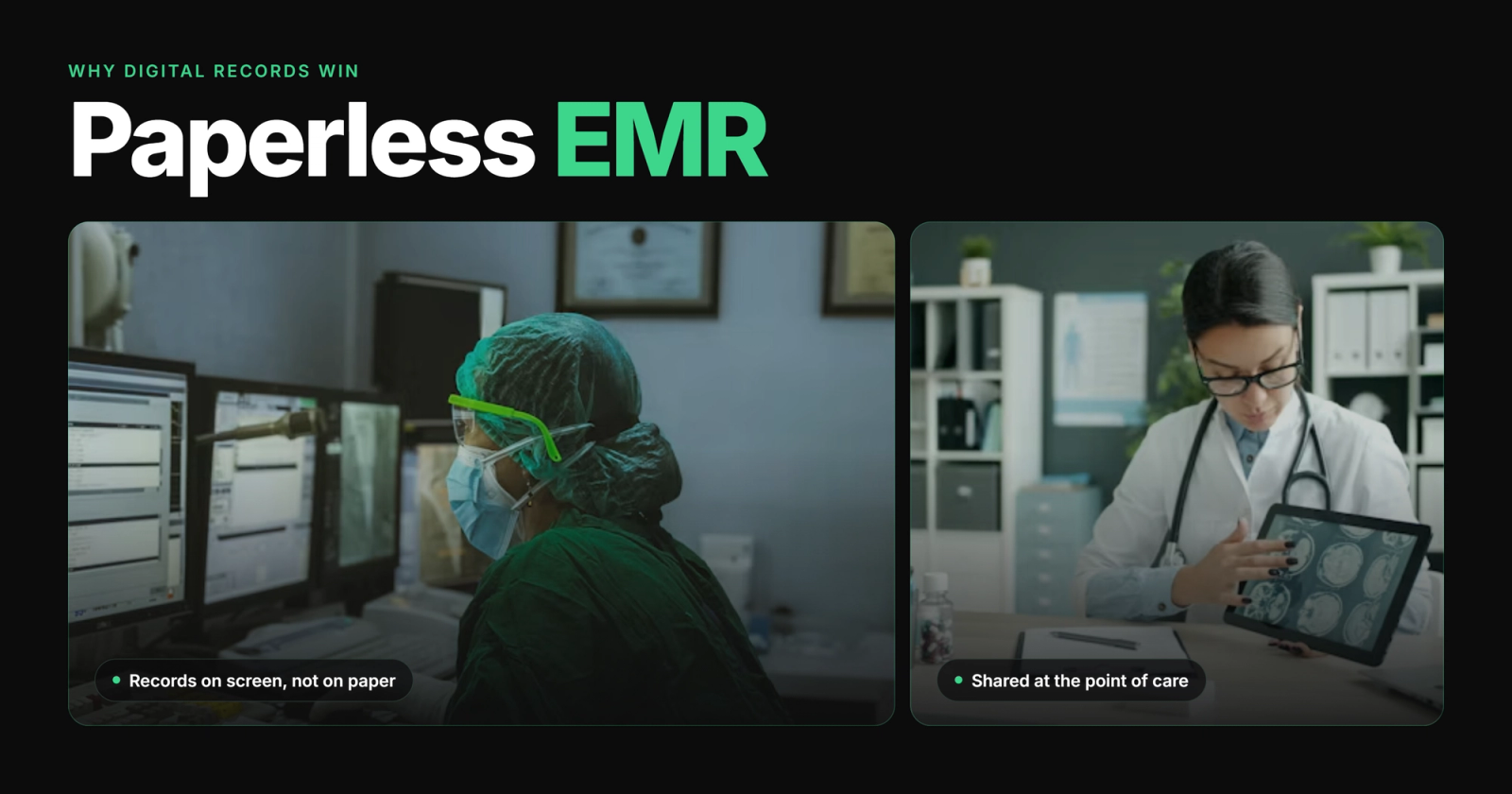
Why Paperless EMR Is No Longer Optional: A Technical Perspective
By Zynva Marketing Team
Introduction
The healthcare industry is undergoing a significant digital transformation, driven by technologies that improve operational efficiency, accessibility, and the quality of patient care. One of the most important changes is the transition from paper-based patient records to Electronic Medical Records (EMR).
For aesthetic and cosmetic clinics, this transition is particularly valuable. Patient profiles, medical histories, treatment plans, consent forms, before-and-after photographs, and billing information all need to be organised, accessible, and protected.
Paper records may appear simple to manage when a clinic has only a few patients. However, as patient volumes grow and treatment workflows become more complex, manual recordkeeping introduces operational bottlenecks, information gaps, and security challenges.
A paperless EMR system is no longer simply a technology upgrade. It is an important foundation for building a more efficient, scalable, and patient-focused clinic.
1. Improved Operational Efficiency and Data Accuracy
Paper-based workflows rely heavily on manual processes. Receptionists retrieve physical files, staff re-enter patient details into forms, and clinicians depend on handwritten notes that may be difficult to interpret.
These activities consume valuable time and increase the possibility of administrative errors.
How electronic records improve efficiency
An EMR system stores patient information in a structured digital format. Instead of searching through filing cabinets, authorised staff can retrieve patient profiles and treatment histories through a centralised interface.
Key technical advantages include:
- Centralised data storage: Patient demographics, treatment history, appointments, and billing records are organised in one system.
- Faster information retrieval: Searchable records reduce the time spent locating patient information.
- Structured data entry: Standardised fields help reduce missing information and inconsistencies.
- Workflow automation: Appointment reminders, follow-up scheduling, and other repetitive administrative tasks can be automated.
- Improved record continuity: Previous treatment notes and relevant patient information can be reviewed before subsequent visits.
For example, when a returning patient visits an aesthetic clinic for a follow-up treatment, staff can retrieve the patient's previous treatment details and relevant notes without searching through paper files.
Automation does not eliminate every data-entry error, but structured workflows and validation rules can reduce common administrative mistakes.
2. Better Accessibility and Continuity of Care
Physical records are tied to their storage location. If a patient's file is in another room, at a different branch, or temporarily misplaced, retrieving the information may delay the consultation.
Digital records offer a more flexible approach.
Accessing records when they are needed
Depending on the system's architecture and permissions, authorised healthcare professionals can access patient information through supported computers, tablets, or other devices.
Cloud-based EMR platforms can also support access across clinic locations, subject to internet availability and appropriate security controls.
This provides several advantages:
- Staff can retrieve patient histories without physically locating files.
- Clinicians can review previous treatment notes before consultations.
- Multi-location clinics can coordinate records through a shared system.
- Patient information can remain available during staff handovers.
- Relevant records can be retrieved more efficiently during follow-up appointments.
Accessibility must always be balanced with privacy. Not every employee should have unrestricted access to every patient record, and patient-facing access should be provided only through appropriately designed features.
3. Reduced Administrative Costs and Better Resource Utilisation
Paper-based recordkeeping creates costs beyond paper itself. Clinics must purchase printing supplies, maintain storage space, organise physical files, and allocate staff time to filing and retrieval.
These expenses can become increasingly significant as the clinic grows.
Where the savings come from
A paperless workflow can reduce expenditure in several areas:
- Printing and stationery: Less dependence on printed forms and duplicate records.
- Physical storage: Reduced need for filing cabinets and dedicated storage space.
- Administrative labour: Less time spent locating, sorting, and filing records.
- Duplicate data entry: Fewer situations where the same information must be manually recorded in multiple places.
- Operational delays: Faster retrieval can help staff manage appointments and consultations more efficiently.
However, digital systems also have costs, including subscriptions, implementation, staff training, integrations, backups, and ongoing maintenance.
The business case should therefore consider the total cost of ownership rather than assuming that digitisation automatically reduces every expense.
For a growing aesthetic clinic, the most valuable return may be the time staff recover and the ability to handle more patients without proportionally increasing administrative workload.
4. Stronger Data Security and Privacy Management
Patient records can contain highly personal information, including contact details, medical history, treatment information, photographs, and billing records.
Paper files can be lost, damaged, misplaced, or viewed by people who should not have access to them. Digital systems introduce their own risks, but they also provide technical controls that can make information easier to protect and monitor.
Essential security controls in an EMR system
A well-designed EMR platform should consider the following measures.
Role-based access control (RBAC)
Access permissions should be assigned according to staff responsibilities. For example, reception staff may need appointment and contact information, while clinicians may require access to treatment histories and clinical notes.
Authentication and session management
The system should verify user identities, manage active sessions securely, and provide appropriate protections against unauthorised account access.
Encryption
Encryption in transit protects information as it moves between a user's device and the server. Encryption at rest can help protect stored information if underlying storage is accessed without authorisation.
Audit logging
Audit logs can record important events, such as viewing, creating, updating, or deleting patient records. These logs help authorised administrators investigate suspicious activity and understand how records have been accessed.
Backup and recovery
Regular backups and tested recovery procedures help clinics restore information after accidental deletion, system failures, or other incidents.
Data retention and deletion
Digital records should be managed according to documented retention policies and applicable legal requirements. The system should support appropriate deletion or erasure processes when information is no longer required and no retention obligation applies.
A critical distinction is that digital storage alone does not guarantee security. A poorly configured system can expose patient information just as a poorly managed paper process can.
Security depends on the software architecture, access configuration, infrastructure, operational policies, and staff behaviour.
5. Improved Collaboration Across Clinic Teams
Aesthetic treatments often involve several team members, including receptionists, doctors, therapists, and clinic administrators.
When each person maintains separate notes or spreadsheets, important information can become fragmented. Staff may work from outdated records or spend time confirming details that should already be available.
An EMR system can establish a shared, structured source of patient information.
How centralised records support collaboration
- Clinicians can review relevant treatment history before a consultation.
- Reception staff can coordinate appointments using consistent scheduling information.
- Authorised team members can review relevant follow-up notes.
- Administrators can manage billing information without relying on disconnected spreadsheets.
- Staff handovers can become more consistent because relevant information is recorded in a shared system.
From a technical perspective, this requires more than placing documents in a shared folder. The system needs consistent data models, appropriate permissions, reliable updates, and clear ownership of records.
For multi-location clinics, additional considerations include synchronisation, conflict handling, availability, and access policies across branches.
The objective is to ensure that authorised team members work with accurate, relevant information without exposing records unnecessarily.
6. A Better Patient Experience
Patients experience the quality of a clinic through more than the treatment itself. Booking appointments, completing forms, waiting for records to be located, receiving follow-up communication, and obtaining billing documents all influence their overall experience.
Paper-heavy workflows can create friction at several of these touchpoints.
How paperless workflows improve the experience
Faster check-in
Digital patient profiles can reduce repeated requests for information that the clinic already holds, subject to appropriate verification and consent.
More informed consultations
Clinicians can review relevant medical history and previous treatments before discussing the next step.
Consistent follow-ups
Appointment reminders and follow-up workflows can help patients remember scheduled visits and recommended reviews.
Organised treatment history
Maintaining treatment notes and relevant records in one system can support continuity across visits.
Easier access to documents
Where supported, digital workflows can make it easier to generate and share invoices, treatment documents, and other appropriate records.
For aesthetic clinics, the patient experience also depends on confidentiality. Medical details and before-and-after photographs should be handled carefully, with appropriate consent and access restrictions.
Technology should make the process more convenient without compromising trust.
7. Scalability and Integration With Modern Clinic Technology
A paper-based process that works for one practitioner may become difficult to maintain when a clinic expands its team, adds treatment rooms, or opens additional locations.
Digital systems can provide a more scalable operational foundation, provided they are designed to accommodate growth.
Technical capabilities to consider
Structured databases
Patient profiles, appointments, treatment records, and billing data should be represented through consistent data structures rather than scattered documents.
API integrations
Well-designed APIs can allow the EMR to exchange information with supported systems, such as payment providers, communication platforms, and reporting tools.
Automated workflows
Background jobs can handle tasks such as scheduled reminders, document generation, and routine notifications without requiring staff to perform every step manually.
Reporting and analytics
Structured records make it easier to analyse appointment attendance, treatment volumes, revenue, and other operational metrics.
Reliability and performance
As the number of users and records increases, the system needs appropriate database indexing, monitoring, backup strategies, and capacity planning.
For cloud-based platforms, availability, latency, data residency requirements, and disaster recovery should also be considered.
These capabilities allow clinics to evolve from manual administration towards more consistent, data-informed operations.
8. Compliance and Responsible Patient Data Management
Digitisation also makes it important to establish clear policies for how patient information is collected, accessed, used, retained, and deleted.
In India, clinics should evaluate their obligations under applicable data protection and healthcare laws, including the Digital Personal Data Protection Act, 2023, and the relevant rules and commencement notifications.
An EMR system can support responsible data management through capabilities such as:
- Recording relevant consent information.
- Separating treatment-related communication from promotional messaging where appropriate.
- Restricting access to authorised users.
- Maintaining audit records.
- Supporting patient requests and grievance handling.
- Implementing documented retention and deletion workflows.
- Helping administrators investigate and respond to security incidents.
The specific controls required depend on the clinic's activities, the data it processes, the legal provisions in force, and any applicable sector-specific obligations.
Important: Adopting EMR software does not automatically make a clinic legally compliant. The clinic remains responsible for its policies, processes, staff training, and implementation of applicable legal requirements.
9. Why Aesthetic Clinics Need a Purpose-Built EMR Workflow
Although general healthcare software can manage patient information, aesthetic and cosmetic clinics have additional operational requirements.
Their workflows may include consultations, treatment plans, procedure histories, consent forms, before-and-after photographs, packages, billing, and scheduled follow-ups.
Managing these activities across disconnected tools can create unnecessary complexity.
A purpose-built clinic management platform can bring related workflows together.
What to look for in an aesthetic clinic system
When evaluating an EMR or clinic management platform, consider whether it supports:
- Patient management: Organised profiles and relevant medical histories.
- Treatment management: Structured treatment notes and visit records.
- Consent management: Appropriate documentation of treatment and photography permissions.
- Appointment scheduling: Calendar management and appointment status tracking.
- Patient communication: Configurable reminders and follow-up workflows.
- Billing and financial records: Organised invoices, payments, and related documents.
- Inventory management: Tracking products and supplies where relevant.
- Access control: Permissions aligned with staff roles.
- Security and recovery: Appropriate authentication, auditability, backups, and recovery procedures.
- Reporting: Operational insights to support clinic management.
The right system should match the clinic's size, workflows, budget, and security requirements. Ease of use is equally important: even a technically capable platform delivers limited value if staff find it difficult to use consistently.
10. How Zynva Helps Clinics Move Towards Paperless Operations
Zynva is a clinic management platform designed for aesthetic and cosmetic clinics. It helps clinics organise key operational workflows in a digital environment.
Instead of relying entirely on paper files, spreadsheets, and separate communication channels, clinics can use Zynva to manage supported activities through a more structured workflow.
Patient and treatment management
Organising patient profiles, visit information, and treatment history can help staff retrieve relevant details more efficiently and maintain better continuity between appointments.
Appointment scheduling and reminders
Digital scheduling helps clinics coordinate appointments, while supported reminder workflows can reduce the need for manual follow-up.
Billing and financial administration
Digital billing workflows help clinics generate and organise invoices, reducing dependence on paper-based administrative processes.
Inventory and operational visibility
Where these features are enabled, digital inventory and reporting workflows can help clinic teams manage supplies and review operational information more systematically.
A more organised patient journey
Bringing supported clinic workflows together can help reduce fragmentation between appointments, patient records, treatments, and billing.
As with any clinic management platform, clinics should assess the specific security controls, access permissions, backup arrangements, consent workflows, and integrations available in their chosen configuration before migrating sensitive patient information.
Explore Zynva: Visit zynva.in to learn more about clinic management software for aesthetic and cosmetic clinics.
Conclusion: Paperless EMR Is an Operational Foundation, Not Just a Technology Upgrade
Moving away from paper-based patient records is about more than reducing stationery costs. It is about building a clinic that can retrieve information efficiently, maintain consistent workflows, protect patient privacy, support collaboration, and adapt as its operations grow.
Electronic Medical Records can help clinics achieve these goals through structured data, controlled access, automation, and improved information availability.
However, successful digitisation requires more than purchasing software. Clinics must select an appropriate system, migrate records carefully, train staff, establish security policies, and review their processes regularly.
For aesthetic and cosmetic clinics in particular, where patient trust and privacy are central to the service, a well-implemented paperless workflow can provide a stronger foundation for day-to-day operations and future growth.
The question is no longer simply whether a clinic should digitise its records. It is how to do so responsibly, securely, and in a way that delivers measurable value to both staff and patients.
Ready to streamline your clinic's operations?
Discover how Zynva can help organise your aesthetic clinic's appointments, patient records, treatments, and billing.
Visit zynva.in to learn more or book a demo.
Disclaimer: This article is intended for general informational purposes and does not constitute medical, legal, or cybersecurity advice. Clinics should assess their own operational and regulatory requirements before implementing an EMR system.
Frequently asked questions
What are the benefits of Paperless EMR?
Paperless EMR offers several benefits, including improved efficiency, enhanced accessibility, cost savings, data security, improved collaboration, and better patient experience.
How do Paperless EMR systems work?
Paperless EMR systems use digital technologies to store and retrieve patient information. These systems can be accessed through digital devices, including smartphones, tablets, and computers.
What are some potential challenges with Paperless EMR?
Some potential challenges with Paperless EMR include security concerns, the need for up-to-date technology, and the need to ensure data privacy and security.
Who benefits from Paperless EMR?
Paperless EMR can benefit healthcare organizations, patients, and healthcare professionals. It can improve efficiency and accessibility, reduce costs, and improve collaboration among healthcare professionals.
How can I implement Paperless EMR in my organization?
Implementing Paperless EMR can be a complex process, but organizations can work with healthcare technology experts to develop a strategy that fits their specific needs